At the start of the semester, when
the class first started, I wish I was handed a guide or manual to give me basic
info about feminism and what was expect in the class. A helpful source like
that would have given me a boost in what MEDIA 384: Women and Media was all
about.
My final project is an
old-fashioned style users manual on the topic of beginners feminism, covering
basic information that would help a non traditional novice feminist student at
Hunter, like myself, when taking their first women’s/gender study course. My
inspiration came from the long forgotten, black and white, VHS type user’s manual.
Works Cited:
Hooks, Bell. “Understanding Patriarchy.The Will to Change: Men, Masculinity,
and Love.” Washington Square Press. 2004 : 17-33
The antagonisms of reality and the potentials
for change are the main concerns in alternative media. The following points
clearly identify what role alternative media plays in today’s world. First,
alternative media challenges male domination. Second, alternative media indicated the standpoints
of the oppressed and dominated groups and people. Alternative media
strengthened communication processes within public spheres.
In traditional media, it focused on marketing because it can apply to high-technology distribution and TV commercial.
In alternative media, technologies are
convenient, cheap and reusable. Alternative media supports
free access and open content. They are helpful, as they allow information and content
on the internet to be shared and even changed in an open way.
The
content of alternative expresses an
interest on gender bias and gender inequality. What was alternative media trying do with the societal development? The question kept showing up in the public is "what is the realization of suppressed
possibilities of societal development?
Its main goal is to strengthen the
creation of a participatory society.
I
focus on Jessica Valenti's Femisting.com. Feministing blog was created in 2004,
and has been covering stories from the perspective of young feminists. The purpose
of this blog is to break stereotypes about young feminists, because mainstream
media and culture excluded young feminist and ignore them from feminist
discourse. This blog also provides a thoughtful and open-minded ways to
discover and discuss the ideas of young feminists in today’s world. This blog
cover the stories from young feminists. The contributors are not daily
amateurs; they are feministing.com blog staff and faculty members who provide a
refreshing young feminist perspective on political and societal issues. The
contributors of the blog usually re-examine and re-think about articles that
has huge disagreement particularly from different points of view. They also
re-define many layers of young feminist ideals and even emphasize on the importance
of them.
Both feministing.com is amazingly feminist because stereotypes still exist in
today’s media world. This blog focuses and even critiques issues that deals
with young women’s identities and shows a widely held but not oversimplified
image or idea of particular group of young women. This way the blog teaches
young women to learn how to protect their identities.
These two blogs address overwhelming issues and consciousness
of danger on gender and sexuality.
To some degree, Feminist blogs like feministing.com and bitch magazine help with political
activism through a number of ways. I probably characterize this blog as an
activist blog even though there is no actual movement, it calls attention to
the public and society; the blog seriously reports on issues that concern young
women. I highly recommend this blog to my fellow classmates who are interested
in news that is discussed with a sense of self-protection. Each blog posting is
precisely written and presents plenty of watchful young feminist lens.
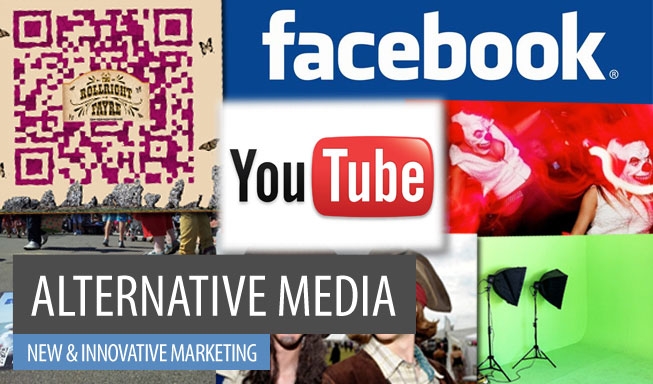
The definition of alternative
means "small-scale, independent, non-hierarchical, non-dominant discourses."
Courtesy of Feministing.com "Alternative media expresses the antagonisms of reality."
Courtesy of New & Innovative Martketing Alternative media means "small-scale, independent, non-hierarchical, non-
dominant discourses."
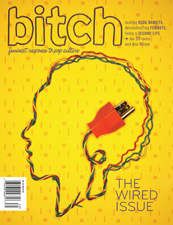
Courtesy of BitchMagazine "Feminist response to pop culture"
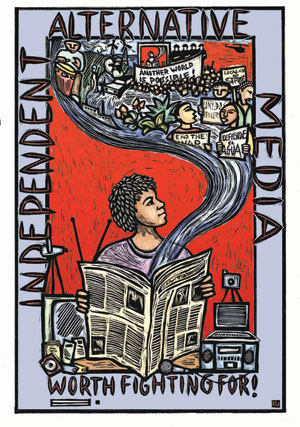
Courtesy of Press Production Assists "Alternative media expresses the standpoints of the oppressed and dominated groups and individuals."
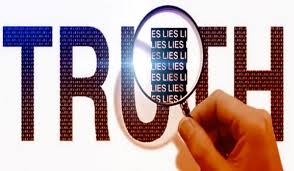
Courtesy of Alternative Media "truth seeker means a person who seeks for the truth."
Courtesy of indiemedia "How to cross referencing the information with independent sources"
Mainstream Media
The definition of mainstream media means "large-scale,
state-owned or commercial, hierarchical, dominant discourses."
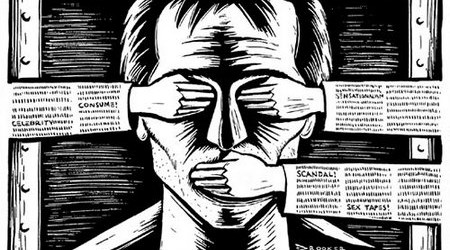
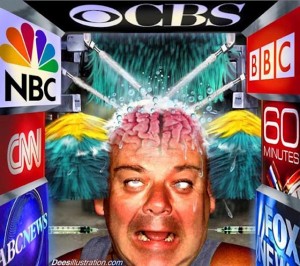
Courtesy of CBS "Mainstream Media deceives you with magic tricks"
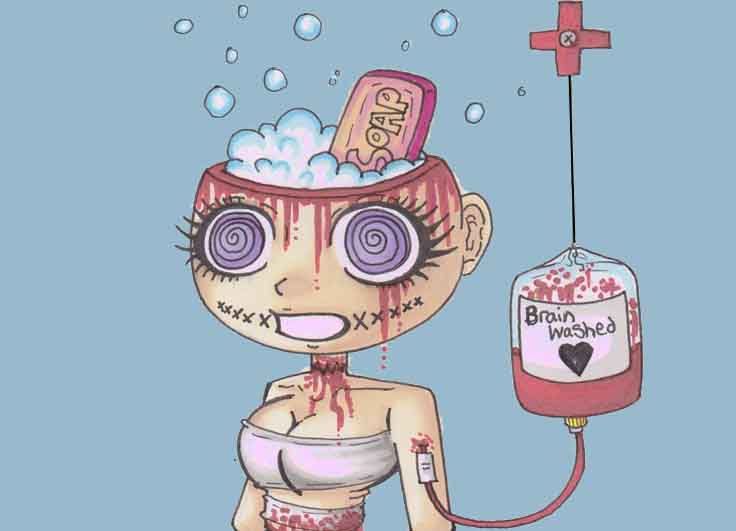
Courtesy of BitchMagazine "Western societies are characterized by mainstream media. They usually brainwash their own people"
Courtesy of truth-is-treason "Mainstream media in the U.S. usually contain roughly 25 percent truths and 75 percent distorted information and lies."
Courtesy of corporatenews "Americans are especially uninformed about international public affairs."
Courtesy of Media-geheim "The percentage of truths and lies will vary depending on the subject that is being covered."
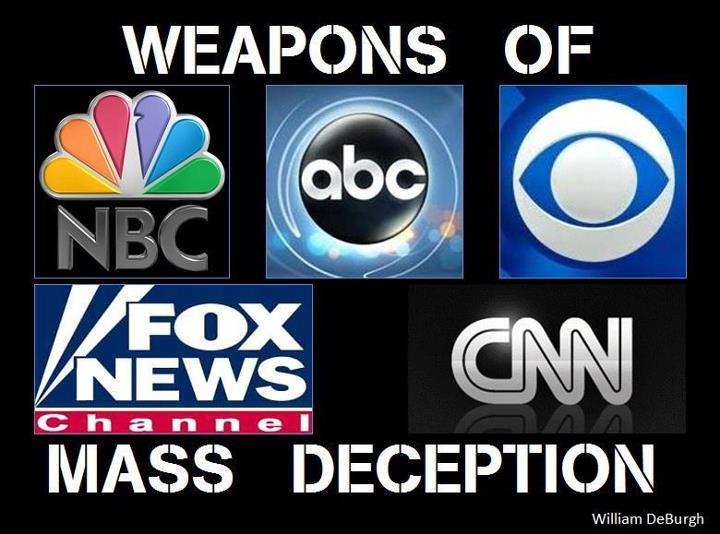
Courtesy of William DeBurgh "Most people in the U.S. do not realize that their mainstream media outlets are owned and controlled by only six corporations."
Courtesy of mainstream "These corporate news control everyone's understanding through their news information every single day."
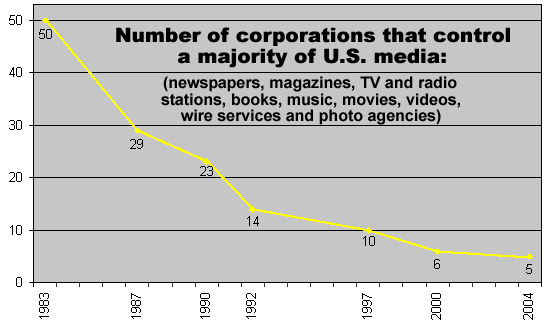
Graph
courtesy of Media Reform Information "In 1983, 50 corporations existed in the U.S"
BIBLIOGRAPHY "Evolving
Gender Roles Explored at Anne Roe Lecture." Harvard Graduate School of
Education. Anne Roe. Web. 11 Oct. 2014.
<http://www.gse.harvard.edu/news-impact/2008/11/evolving-gender-roles-explored-at-anne-roe-lecture/>.
"Gender Roles and the Media." InfoRefuge.com. Web. 20 Oct. 2014. <http://www.inforefuge.com/gender-roles-media>.
Rolfes,
S. R., K. Pinna, and E. Whitney. Understanding Normal and Clinical
Nutrition. Eighth Ed. Belmont, CA: Brooks/Cole Pub Co, 2009. 270
Christina Aguilera and Lil Kim is Can't hold us down.
One of the earliest songs that I remember pushed for female empowerment is “Can’t hold us down” by Christina Aguilera. In this song which features female rapper Lil Kim both artists attempted to send a powerful message to “Girls all around the world, who’ve come across a man who don't respect your worth thinking all women should be seen, not heard, what do we do girls? Shout out loud!” This song came out in 2003, and precisely a year later a new type of music dominated the airwaves and gained widespread popularity in the United States and other regions, and this type of music is known as reggeaton. Reggeaton is a combination of salsa, merengue and reggae along with often over the top sexually explicit rap lyrics in street Spanish. In addition according to an article on BBC News titled Puerto Rico Shakes to a new beat, in the music videos “the macho lyrics are complemented by a hip-grinding dance style known as “perreo” or “doggie” in Puerto Rican slang. In the same article a barmaid Linette Rivera speaks against this insulting genre of music and states “the videos are permeated with scantily- clad women filmed with cameras placed carefully at the most revealing angles”. In another article titled Sexism and racism permeate music videos, according to new report published on The Guardian which states that men are portrayed as the characters with "power and dominance, and women as passive recipients of their gaze" Does this sound familiar? This indeed brings us to the subject of the male gaze.
La Grand Odalisque by Ingres
The earliest form of objectification that existed as discussed in a reading in the book Ways of Seeing it is mentioned that back in history during the Renaissance in numerous European oil paintings such as La Grand Odalisque, women were portrayed in the nude and existed“ to feed the appetite, [and] not to have any of their own” (55) How does this connect with the male gaze? To every painting there is a perspective and to that perspective there is an artist and according to the reading the majority of the artists were men and in result women were victims of their subjectivity.
Female objectified by the Male Gaze
When films were first introduced, females behind the camera lens were being portrayed in ways in which only men desired to see a woman. For instance in scenes when a woman entered a room would often start with a slow motion panning up her body showing off her figure and occasionally the director would add a romantic tune to intensify this moment of fantasy. The trend became that men were being portrayed in very heroic forms while women would only have to stand there as an object of admiration. Bell hooks an American feminist emphasizes on the idea that we learn how to act, behave and talk based on what we see. If we look at certain images repeatedly there is a link between representation and how we live our lives. In an online reading titled Cultural Criticism and Transformation Hooks states that if we watch enough of those images we may come away thinking that certain forms of unacceptable male violence towards females are acceptable. Although much of her work is based on representation of women film this can also be applied to other mediums such as the music industry.
Gasolina Music Video by Daddy Yankee
Daddy Yankee is one of the most well known reggaeton artists, girls around the world go head over heels for him. One of his many songs that were popular at the height of reggaeton music is "Gasolina". The music video contains images of females dancing provocatively and suggesting sexual interest while wearing short skirts, booty shorts, belly shirts and wearing about 2 pounds of makeup, and not to mention that the camera is constantly zooming in and out to different parts of their body. To add on to the heat, the lyrics of this song goes as follows, Daddy Yankee raps “A ella le gusta la gasolina” and the female voice responds “dame mas gasolina”. If you translate word for word those lyrics literally mean, she likes the gasoline as the female responds give me more gasoline. The truth is this song is not about gasoline but instead is about the male offering up his semen as the female is dancing provocatively begging for his “gasoline”.
Arcangel in his music video "Bellaquera"
Another song by artist Osmani Garcia titled “Chupi Chupi”, contains lyrics which can be translated to “go make yourself pretty, and turn out the lights, the orgy has begun”. Similarly another song titled Kimba Pa Que Suene by Los Principales which “translates to “shake it so it goes off” - the song is a homage to masturbation”. Reggeaton is also associated with promoting messages of violence towards women. For instance in the song “Bellaquera” by Arcangel he raps “Si fuera un clavo y yo un martillo, quisiera clavarte” which translates to “If you were a nail and I a hammer, I’d want to nail you” . Another example is another song by Daddy Yankee titled “En la cama” the lyrics are “A ella le gusta que le den duro y se la coman” which translates to “she likes it hard and to be eaten”. In a reading titled The effects of Violent Music on Children and Adolescence states that music without a doubt affect our identity and the way we crate relationships with others. In a study that was conducted students were asked to rank music against other sources of moral and social guidance such as school, parents and teachers. The results were “16 percent ranked music among the top three sources of moral guidance, and 24 percent placed music in the top three for information on social interaction" (p158-159) In an interview the Director of the Center for Media and Child Health Michael Rich stresses the fact that music is a powerful motivator of behavior and that we should not underestimate it because it touches the emotional system of our brain. A study conducted by the American Psychological Association found that "songs with violent lyrics increase aggression related thoughts and emotions and this effect is directly related to the violence in the lyrics". What we can take away from this is that music but more importantly the lyrics inevitably can function as social mirrors providing the listener with a descriptions of the world they live in and teach how to construct social identity
"Usa la razon" campaign poster
In response to these violent lyrics a campaign known as “Usa la razon” which translates to “Use your head” started in Colombia South America In effort to bring awareness to the violence directed towards women in reggaeton songs that have become global hits. According to Global Voices a news website, "8 out of 10 reggaeton female consumers who listen to reggaeton feel that they are mistreated by it”. In response to this alarming statistic the students created the campaign in which they took lyrics to some of the songs and turned them into images of women being abused, this was done in effort to bring to their attention the role they have in it. Some of the songs that were selected are those that were previously mentioned “Bellaqure” by Arcangel, “La Bellaquera” by Yaga & Mackie Ranks and “En la cama” by Daddy Yankee. Despite all the controversy surrounding the context of reggaeton music Daddy Yankee defended reggaeton in an interview published in the Los Angeles Times where he states that reggaeton isn't sexist toward women and he claims that “It’s unjust to blame the movement, on the music , when it has more to do with poor business logistics”
"Usa la razon" campaign poster
"Usa la razon" campaign poster
Cuba has take this matter into their own hands and according to the article titled Cuba Cracks Down on Vulgar and Reggaeton Music published on The Guardian, the Cuban Music Institute Boss Orlando Vistel Columbe has placed restrictions on all public spaces from playing reggaeton and other musical styles that contain "aggressive, [and] sexually obscene lyrics that deform the innate sensuality of the Cuban woman, projecting them as grotesque sexual objects." Recordings are already being destroyed from official catalogs and those who decide to play reggaeton are threatened with permanently being removed from official lists, making it hard for them to find work.
Although not all reggaeton victimize women, those songs don't seem to make it to the ariway as frequent as the controversial ones. In my opinion I don't think that we should go as extreme as Cuba and ban all reggaeton, but perhaps campaigns similar to “Use your head” should be adapted in effort to bring awareness in neighborhoods where reggaeton music is more prominent. There are also other ways in which Bell Hooks in reference to films suggest that we as a community can come together and make a change. In her essay Kids: Transgressive Subject Matter- Reactionary Film Hooks talks about how we have the power to shut down a movie that contains content that is unpleasant. She then suggests “Picketing and boycotts are one of the cheapest and most effective ways to let the world know that the images we are being asked to consume are undesirable… demanding a change in what we see on the screen is one way to transform the culture we live in”. (p96) This can equally be applied to those making an effort in changing the portrayal of women in reggaeton music. Sources: "This Colombian Campaign Took Reggaeton Lyrics and Turned Them Into Shocking Images of Women Being Abused · Global Voices." Global Voices Overall RSS 20. N.p., 11 June 2014. Web. Johnson, Reed. "Daddy Yankee Says Reggaeton Isn't Sexist toward Women." Los Angeles Times. Los Angeles Times, 13 Sept. 2012. Web. Tremlett, Giles. "Cuba Cracks down on 'vulgar' Reggaeton Music." The Guardian. N.p., 6 Dec. 2012. Web. Wells, Matt. "Puerto Rico Shakes to a New Beat." BBC News. BBC, 07 Mar. 2005. Web. Berger, John (1972). Ways of Seeing. London: British Broadcasting Corporation and Penguin Books Hooks, Bell. "Chapter 9." Reel to Real: Race, Sex, and Class at the Movies. New York, NY: Routledge, 1996. N. pag. Print. "Sexism and Racism Permeate Music Videos, According to New Report." The Guardian. 8 Aug. 2014. Web. "Violent Music Lyrics Increase Aggressive Thoughts and Feelings, According to New Study." Http://www.apa.org. N.p., n.d. Web.
Colombians are portrayed in the media as hyper-sexualized, ideal image of a latina. Latinas to aspire to become that representation and that desire to be something that only serves a man’s interest results in a warped way of life where they put their own interests to the side with or without them realizing.
Latina celebrities common in the media like Sofia Vergara and Shakira set up a level of sexiness and attitude that is so appealing, it makes Colombians in general feel like we have to aspire to be like them to truly fulfill the notorious Colombian ideal, which is a slender but curvaceous women with big boobs and butt, long black or brown hair, and olive-toned skin.
It makes the majority of Colombian women obsesses with getting breast or butt augmentations. There have been Novelas, such as Sin Senos Noy Hay Paraiso, adapted from books, based on real stories about a girl's struggle in Colombia with affording implants, and the lengths they would go through to get them.
We are shown that sexual appeal as an empowerment for women it, but that sexual interpretation of power is merely a smoke screen for how debilitating it is to our potential as humans. We all have the same potential, but we are, as Latinas, assigned a meaningless role in the media to give pleasure visually, audibly, and directly.
Another stereotype that goes hand in hand with the way we are hyper- sexualized is aggression. That aggression or feistiness is what is called the Latin fire, which is also the reason our culture is associated with the color red most of the time. Red is synonymous with passion, whether it be sexual or emotional, it’s the way we are colored. Colombia has a long history of violence that it has become famous for with its drug trafficking and drug lords, such as Pablo Escobar.
Those stereotypes are so damaging to our value because girls my age end up not giving the slightest thought to their education, career, or living up to their full potential. They care about curling their hair, how many likes they get on Instagram, and how to get their crush to fall in love with them, things that really don’t get them anywhere. And for the Colombians who don’t live up to the physical expectations? Shame on us! Or at least, that’s what the media makes us feel inevitably because if we don’t fit that ideal, then we aren’t beautiful. What about the Afro-Latinas? They become invisible. And we have the natural emotion of anger, but it has to be the right one, which is sexually aggressive and turns men on.
Works Cited
Aristizábal, Adriana. "Colombians Are Tired of an Age-Old Stereotype." The Huffington Post. TheHuffingtonPost.com, 30 June 2014. Web.





![Americans [are] especially uninformed about international public affairs.](https://onlinejournalism2952014.files.wordpress.com/2014/12/corporatenews040714.jpeg)